Concrete Grinding: What Is It and How Much Can a Grinder Remove?
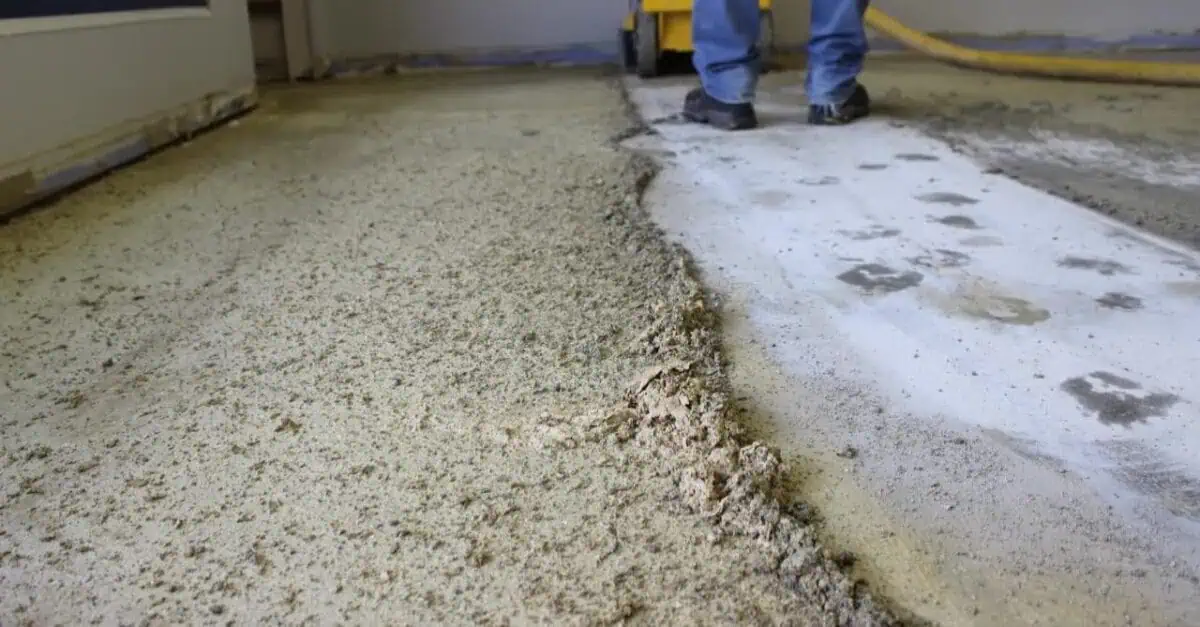
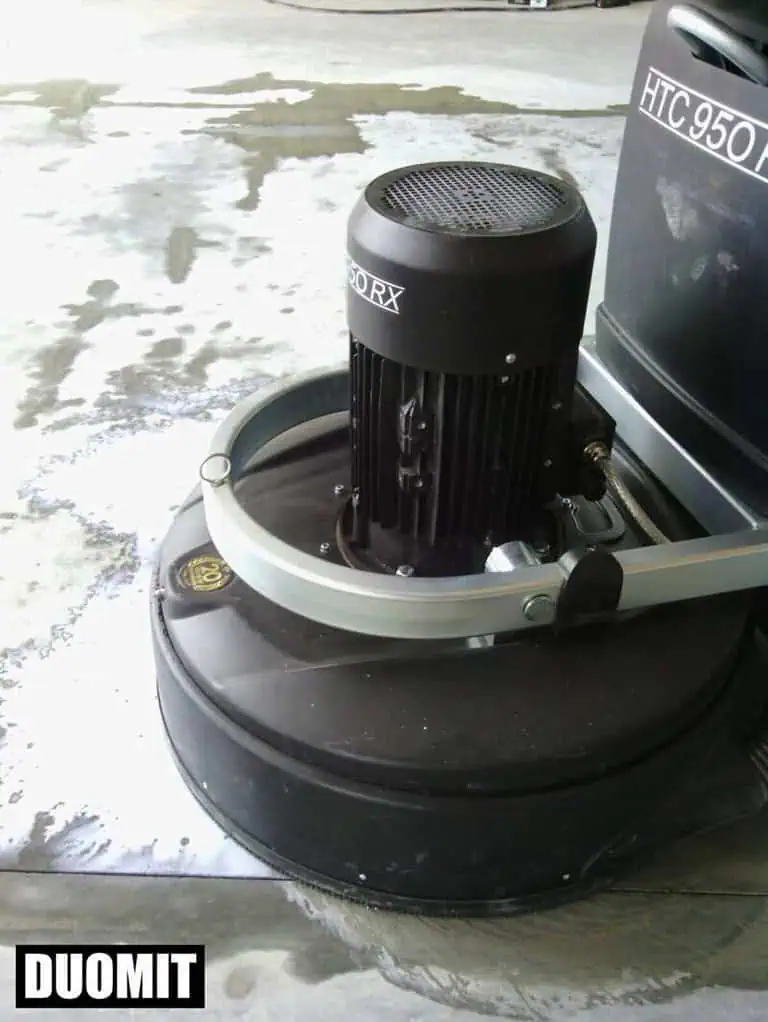
Concrete grinding is a mechanical surface-preparation process used to remove coatings, adhesives, surface irregularities, and weak or contaminated concrete. Specialized grinding equipment—such as Husqvarna or SASE machines—is fitted with industrial diamond tooling selected according to the hardness of the concrete and the material being removed.
The process can be used to:
- Remove old epoxy coatings, mastics, adhesives, and waterproofing membranes
- Correct minor surface unevenness
- Eliminate trowel marks and surface imperfections
- Open the concrete surface before applying a new coating or membrane
- Create the required concrete surface profile
- Prepare floors for polishing, sealing, or resurfacing
How Much Concrete Can a Grinder Remove?
The amount of material a grinder can remove depends on several factors, including the machine size, tooling, concrete hardness, aggregate, operator experience, and number of grinding passes.
A light grinding pass may remove only a thin surface layer, while aggressive diamond tooling can remove several millimeters of concrete. In localized areas, heavier equipment can remove more material, but grinding should not be treated as a substitute for major slab correction or structural repair.
Before grinding begins, the contractor should evaluate:
- Required removal depth
- Existing coatings or adhesives
- Concrete hardness
- Slab thickness
- Reinforcement depth
- Flatness and levelness requirements
- Final flooring system
- Surface-profile requirements
Removing too little material may leave contamination or weak concrete behind. Removing too much can expose aggregate unnecessarily, create low areas, damage the slab, or increase the amount of repair material required.
Removing Coatings, Adhesives, and Membranes
Old mastics, glues, waterproofing membranes, and epoxy coatings can be difficult to remove using traditional methods. Concrete grinding provides a controlled and efficient way to remove these materials while preparing the substrate for the next flooring system.
The correct tooling is critical. Soft, sticky materials may require specialized removal tools rather than standard grinding diamonds, while hard coatings may need more aggressive metal-bond tooling.
When performed correctly, concrete grinding can simplify surface preparation, improve adhesion, reduce the risk of coating failure, and create a clean, consistent substrate for new coatings, membranes, adhesives, or polished concrete systems.
Renovating Concrete in the Office?
Epoxy Flooring: Durability and Elegance of your office's concrete.
Transform your Commercial Spaces with Epoxy decorative overlay.
Why Is Mechanical Surface Preparation the Best Method for Concrete Floors?
Mechanical surface preparation is one of the most effective ways to prepare concrete before installing a new flooring system. Depending on the project, the work may be completed using dry or wet grinding, shot blasting, scarifying, or other specialized equipment.
Proper preparation is essential before installing hardwood, tile, carpet, coatings, membranes, self-leveling underlayments, or polished concrete. It helps create a clean, sound, and properly profiled surface that supports stronger adhesion and longer-lasting performance.
Surface preparation is especially important when concrete will remain exposed, be polished, or receive an epoxy or resinous coating. Any cracks, contamination, unevenness, laitance, or previous adhesive left on the slab may affect the final appearance and performance of the new system.
Benefits of Mechanical Concrete Surface Preparation
Restores the Concrete Surface
Mechanical preparation removes weak surface material, laitance, minor irregularities, and other imperfections. This creates a more consistent and usable substrate for the next stage of work.
Removes Coatings and Contaminants
Grinding and other mechanical methods can remove:
- Old paint and epoxy coatings
- Adhesives and mastics
- Dirt and surface contamination
- Curing compounds
- Waterproofing membranes
- Thin patches and weak toppings
Removing these materials helps prevent adhesion problems and premature flooring failure.
Improves Bond Strength
A properly prepared surface allows primers, coatings, adhesives, and repair materials to bond more effectively with the concrete. The required surface profile should always match the flooring manufacturer’s recommendations.
Supports Better Flooring Installation
A clean and properly prepared slab makes it easier to install coatings, tile, carpet, hardwood, membranes, and other flooring systems. It also helps reduce visible imperfections and improves the quality of the finished floor.
Extends the Life of the New Flooring System
Surface preparation is one of the most important factors affecting flooring durability. Even a high-quality coating or covering can fail if it is installed over weak, contaminated, or improperly prepared concrete.
The best flooring system starts with the right substrate. Professional mechanical preparation helps reduce installation risk, improve appearance, and protect the customer’s investment over the long term.
How Much Will a Concrete Grinder Remove?
Let’s find out how much a concrete grinder removes. As a matter of fact, a concrete grinder can remove as much concrete as you wish, but its limitations are:
- the hardness of the concrete;
- the type of diamond tooling;
- The amount of time you spend on the floor.
A small planetary concrete grinder with basic grinding tools will remove around 1/16″ of the concrete in 1-2 passes in a normal situation. You might be able to remove more – 1/8″ if you use a heavier concrete grinder and more aggressive PCD tools. In fact, an angle grinder with a cup wheel will do the best job.
It will be easier to grind in soft concrete, especially if you use highly aggressive PCD tools for removing concrete layers, such as glue, black mastic, or other imperfections.
Lastly, the more pressure you put on the grinder, the more wear you put on the diamond tools. If you need to remove a thicker layer of concrete faster, you may need an extremely soft bond grinding pad.
Finally, concrete grinding is often seen as a finishing or refinishing procedure. But if you have a thick layer to remove, contractors suggest a complete demo and re-pour the slab.
How Long Does Grinding Take?
Do people also ask about how long grinding takes? As a matter of fact, the time of concrete grinding depends on a few factors:
- How big is the project?
- Is the area quite open, or does it consist of many small spots?
- What kind of finish do you expect – polishing or sealing?
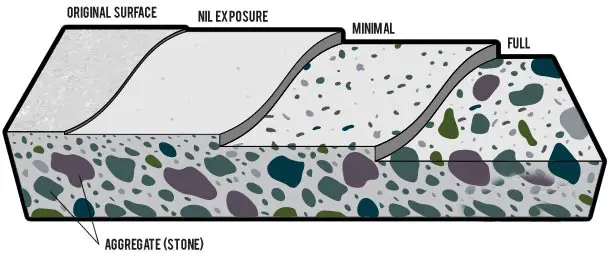
- How much exposure to aggregate do you want to see?
- What kind of shine do you desire?
How much does it cost to grind concrete?
In fact, concrete grinding contractors typically charge $0.75- $2 per square foot for light concrete sanding. This makes the floor ready to install a new floor covering. Moreover, check out the ranges for different types of glues or mastic removal:
- A thin layer of epoxy paint, VCT glue, or mastic: $1 to $1.2 per square foot.
- Thick coatings 1/8-1/4″: $1.3 to $1.5 per square foot.
- Black heavy mastic (multi-layer): $1.5 to $2 per square foot.
- Check our Concrete Calculator. You can find out How much concrete do you need?
Do you want to know how much a concrete grinder will remove? Here are the answers, along with other commonly asked questions.
The beauty of choosing a full exposure aggregate of polished concrete for your space – whether residential or commercial. Is that you got a truly unique floor? No two concrete floors are the same, as it all comes down to concrete quality, technique, and the amount of aggregate.
However, most people don’t know how to achieve that shiny and refined style. Also, aggregate exposure ranges from minimal to open-stone exposure, depending on the depth of the rocks within the concrete and the grinding.
Concrete Grinding Contractors Near Me
Firstly, your best option to find out the floor prep cost in your area is to contact a contractor. Secondly, request a Free Estimate to find out the best competitive price from your Concrete Contractors Near Me. Lastly, if you’re getting into the game of floor renovation, hiring a Pro will most likely help to avoid wasting time and money on your first few jobs.
Consequently, in this article, we learned what ground concrete is. Also, what is the best prep method? And how much will a concrete grinder remove? Feel free to ask our specialist a question.
If you are interested, you can also read about why acid etching is not effective for surface prep and for textured concrete.