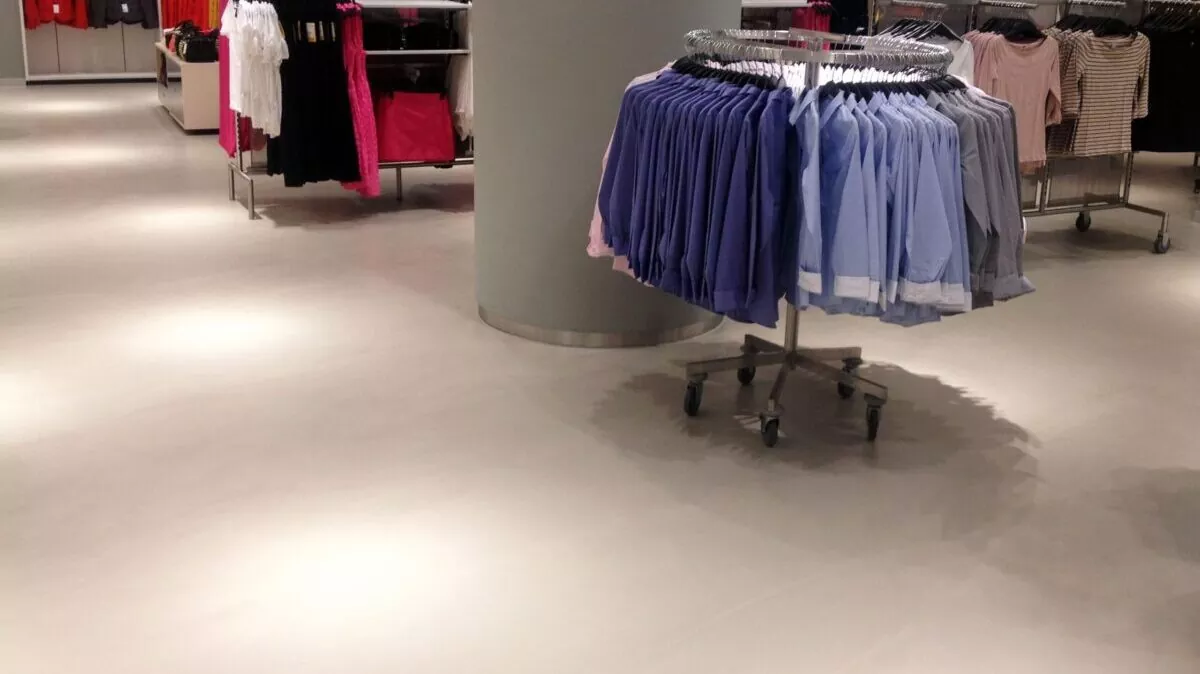
Epoxy flooring, a popular choice in commercial settings for decades, is now widely available for homeowners due to its durability and easy installation process.
What is Epoxy Flooring?
Epoxy flooring is created by combining a liquid mixture of resin polymers with a solid material called a hardener. When these two ingredients are mixed, they form a solid substance.
It is common for individuals to assume that epoxy paints are similar to traditional colors like varnish or semi-gloss. However, it is essential to note that epoxy coatings are significantly distinct from standard garage floor paints.
Benefits of Epoxy Flooring
Epoxy flooring is a two-component resin system that is mixed before application to create a strong, durable bond with properly prepared concrete and other compatible surfaces. Unlike conventional water-based, oil-based, or enamel paints, epoxy paints form a much stronger bond with the substrate, providing superior adhesion and long-term performance.
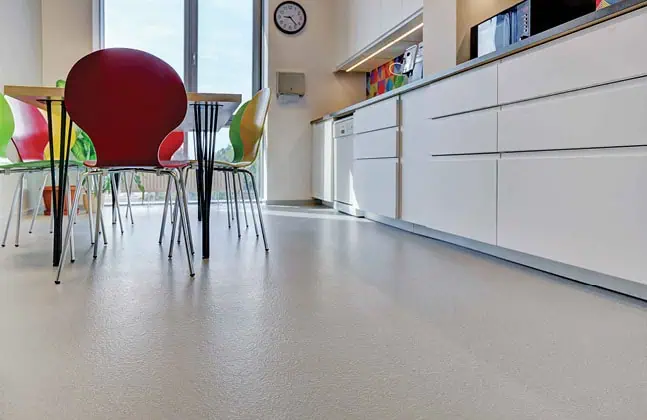
One of the main advantages of epoxy flooring is its smooth, seamless, and attractive finish. Available in a wide range of standard and custom colors, epoxy systems can be designed to complement industrial, commercial, retail, and institutional environments.
Epoxy flooring also offers excellent resistance to water, stains, chemicals, and everyday wear. Its seamless surface helps reduce the areas where dirt, moisture, and contaminants can collect, making it easier to clean and maintain. In most cases, regular sweeping and mopping are sufficient to keep the floor looking professional.
Additional benefits include:
- Durable performance under foot traffic and rolling loads
- Improved resistance to moisture and surface damage
- Easy cleaning and maintenance
- A clean, modern, and professional appearance
- Custom color and decorative design options
- Long-term value compared with conventional floor paints
For customers looking for a durable, low-maintenance, and visually appealing flooring solution, epoxy flooring can be an excellent long-term investment.
Available Types of Epoxy Flooring
Epoxy flooring systems are available in a wide range of finishes, colors, textures, and performance levels. The right system should be selected based on the environment, traffic, chemical exposure, maintenance requirements, slip resistance, and desired appearance.
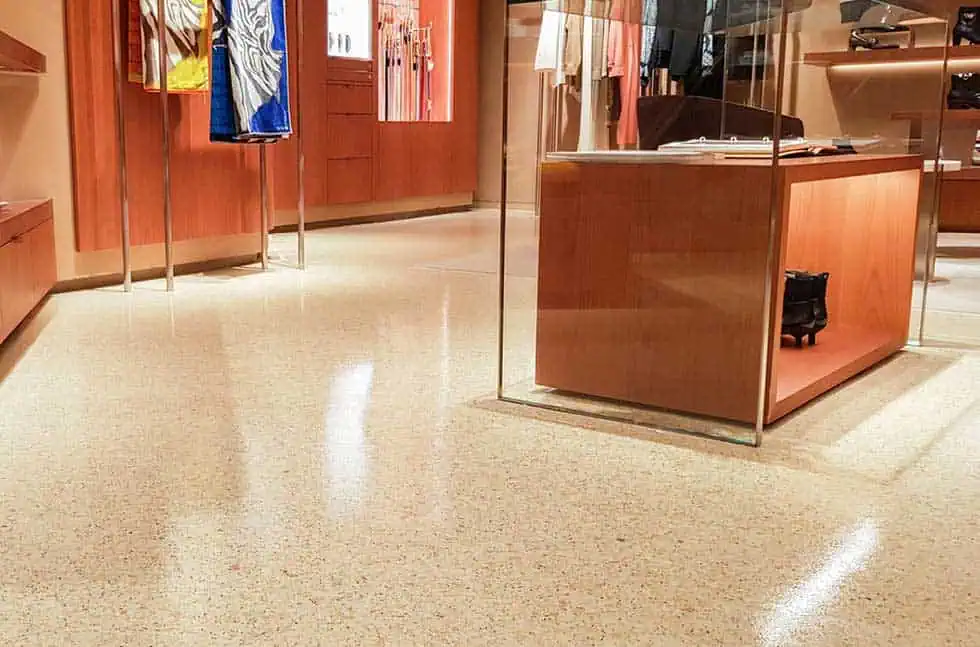
One of the most popular decorative options is a color-flake epoxy system. Decorative flakes create an attractive, granite-like finish while helping to conceal minor surface imperfections. When properly specified, installed, and maintained, these systems can provide many years of reliable service in commercial, industrial, retail, and institutional environments.
Other common epoxy flooring options include:
- Solid-color epoxy coatings
- Decorative color-flake systems
- Metallic epoxy finishes
- Quartz-broadcast systems
- Epoxy mortar systems
- High-build industrial coatings
- Slip-resistant and chemical-resistant systems
Epoxy products are also classified by their solids content. The term “100% solids” describes a coating that contains little or no volatile material. After curing, nearly all of the applied product remains on the floor as part of the finished coating.
By comparison, water-based and solvent-based epoxies contain components that evaporate during curing. As a result, the final dry-film thickness may be lower than the wet-film thickness applied.
Higher-solids epoxy systems can provide:
- Greater film thickness
- Improved durability
- Better resistance to impact and abrasion
- Stronger long-term performance
- Reduced shrinkage during curing
However, solids content alone does not determine the quality or suitability of an epoxy floor. Surface preparation, slab moisture, installation conditions, system thickness, topcoat selection, and facility demands are equally important.
For maximum value, the flooring system should be professionally designed around the customer’s operational requirements rather than selected solely by product type or solids percentage.
What Is the Difference Between Epoxy Paint and Epoxy Coating?
The terms epoxy paint and epoxy coating are often used interchangeably, but they are not always the same.
Epoxy paint is typically a thinner, lower-build product that may contain only a limited amount of epoxy resin. It is often used when a painted appearance is the main objective. Epoxy coatings, by comparison, are generally formulated to create a thicker, harder, and more durable protective surface.
Solids content is one of the factors that affect the final thickness of an epoxy system. For example, if an epoxy coating contains 90% solids, approximately 10% of the product may evaporate during curing. The remaining material forms the finished coating.
Lower solids content is not always a disadvantage. Epoxy primers are commonly formulated with a thinner consistency to penetrate the concrete surface and improve adhesion between the slab and subsequent coating layers.
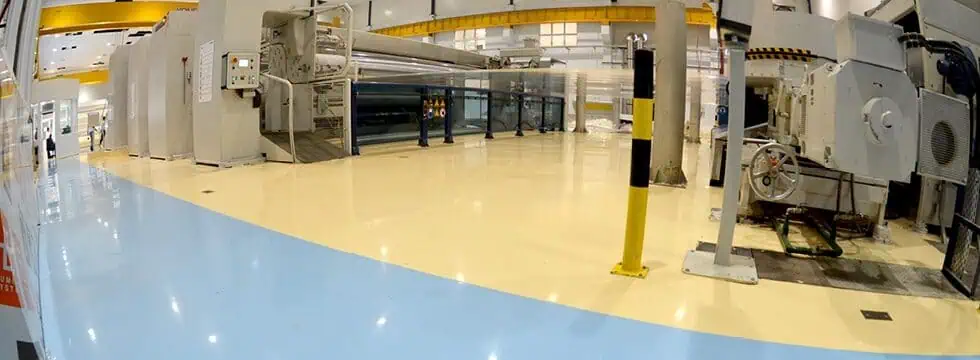
When properly specified and installed, epoxy coatings can provide a smooth, seamless, and durable finish over prepared concrete and other compatible substrates. They are widely used in commercial and industrial facilities where floors may be exposed to heavy foot traffic, rolling equipment, impact, abrasion, chemicals, and frequent cleaning.
Epoxy flooring systems can also be customized to meet different functional and aesthetic requirements. Common options include:
- Solid-color epoxy systems
- Decorative color-flake finishes
- Metallic epoxy floors
- Quartz-broadcast systems
- High-build industrial coatings
- Slip-resistant systems
- Epoxy mortar and resurfacing systems
Metallic and decorative epoxy systems are particularly popular in retail, office, showroom, hospitality, and residential environments because they combine durability with a distinctive visual appearance.
Standard epoxy may yellow or discolor when exposed to direct ultraviolet light. For areas with significant sunlight or exterior exposure, a UV-stable topcoat, such as a polyurethane or polyaspartic finish, may be recommended.
The best epoxy flooring system should be selected based on the substrate condition, expected traffic, chemical exposure, moisture levels, cleaning procedures, slip-resistance requirements, and desired appearance.
With proper preparation, professional installation, and the correct system design, epoxy flooring can deliver excellent strength, durability, and long-term value in demanding environments.
Is Epoxy Flooring a good idea?
We provide designer epoxy solutions and commercial coatings for various commercial spaces, including offices, retail stores, restaurants, and art galleries in New York and New Jersey.
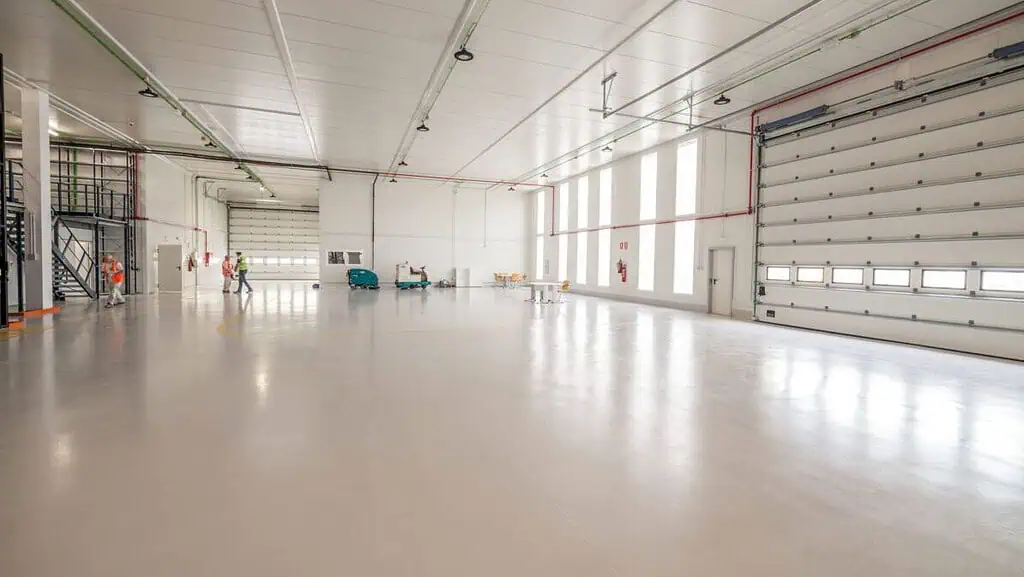
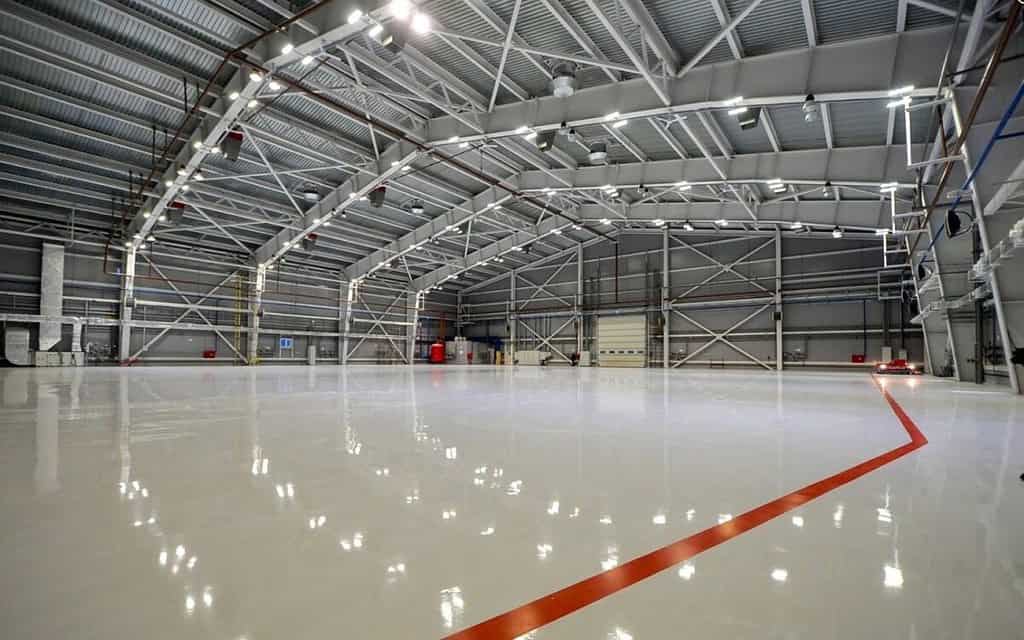
Our clients include industrial warehouses, distribution facilities, schools, hospitals, clinics, fire and police stations, and garages. Commercial applications typically use solid colors ranging from light gray to dark gray. These floors are durable and protect the base from damage, extending its lifespan.
Epoxy floors are ideal for high-traffic areas, as they are durable and easy to clean. They also protect from light damage.
Unlike other water-based paints, high-solid epoxy doesn’t contain water or solvents that evaporate. Therefore, epoxy coatings are more durable and last longer than regular floor coatings.
Advantages of Epoxy Flooring
- Epoxy coatings prolong the lifespan by withstanding light foot traffic and heavy equipment loads, preventing cracking or sinking.
- It only requires once-a-week water wiping or swabbing. The epoxy coating increases abrasion and chemical resistance, making it easy to clean and maintain.
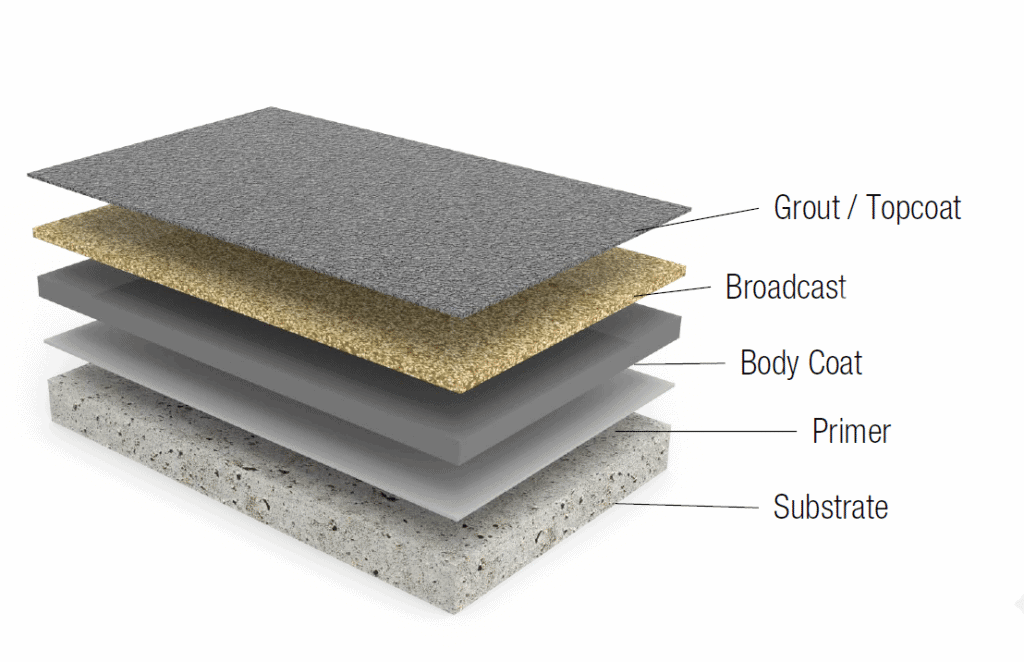
- Adding aggregate (such as quartz or chips) through multiple coatings is a great way to achieve the desired thickness. With patience and attention to detail, achieving the desired results is possible.)
- Typically, it is significantly thicker, around 30 mils, compared to the traditional coatings that are only 3-5 mils thick.
- The quality of this product is exceptional, as it is built to last and boasts a sleek, polished appearance.
How long will the epoxy flooring last?
Although the epoxy solution is highly valued for its exceptional durability in withstanding heavy impacts and resisting abrasion, it is not without its limitations and weaknesses that must be taken into consideration.
In residential settings, some epoxy coatings can last up to 20 years. However, commercial spaces are subject to higher levels of foot and vehicular traffic, accidents, and spills. Additionally, various types of loading can cause the epoxy to wear down more quickly.
It has been observed that the average lifespan of commercial epoxy floors ranges from 5 to 10 years. However, some floors can have a longer life expectancy.
What is Quartz Epoxy Flooring?
Quartz Epoxy is created by layering epoxy and colored quartz sand, resulting in a durable surface that offers superior impact resistance compared to regular paint. Additionally, the colored pattern conceals dirt and debris, making it ideal for use in parking decks and car garage floors. This type of flooring can be applied by contractors in thicknesses ranging from 32 to 128 mils.
DUOMIT is a full-service concrete floor restoration, industrial, and commercial epoxy installer. We create a seamless floor coating for you and can quickly respond to support you with different concerns. Request your Free Estimate today!
Want to learn how to clean and maintain epoxy floor coating? If you liked the article, you might be interested to read more about Concrete Stains.